In this article
Introduction & Regulatory Context
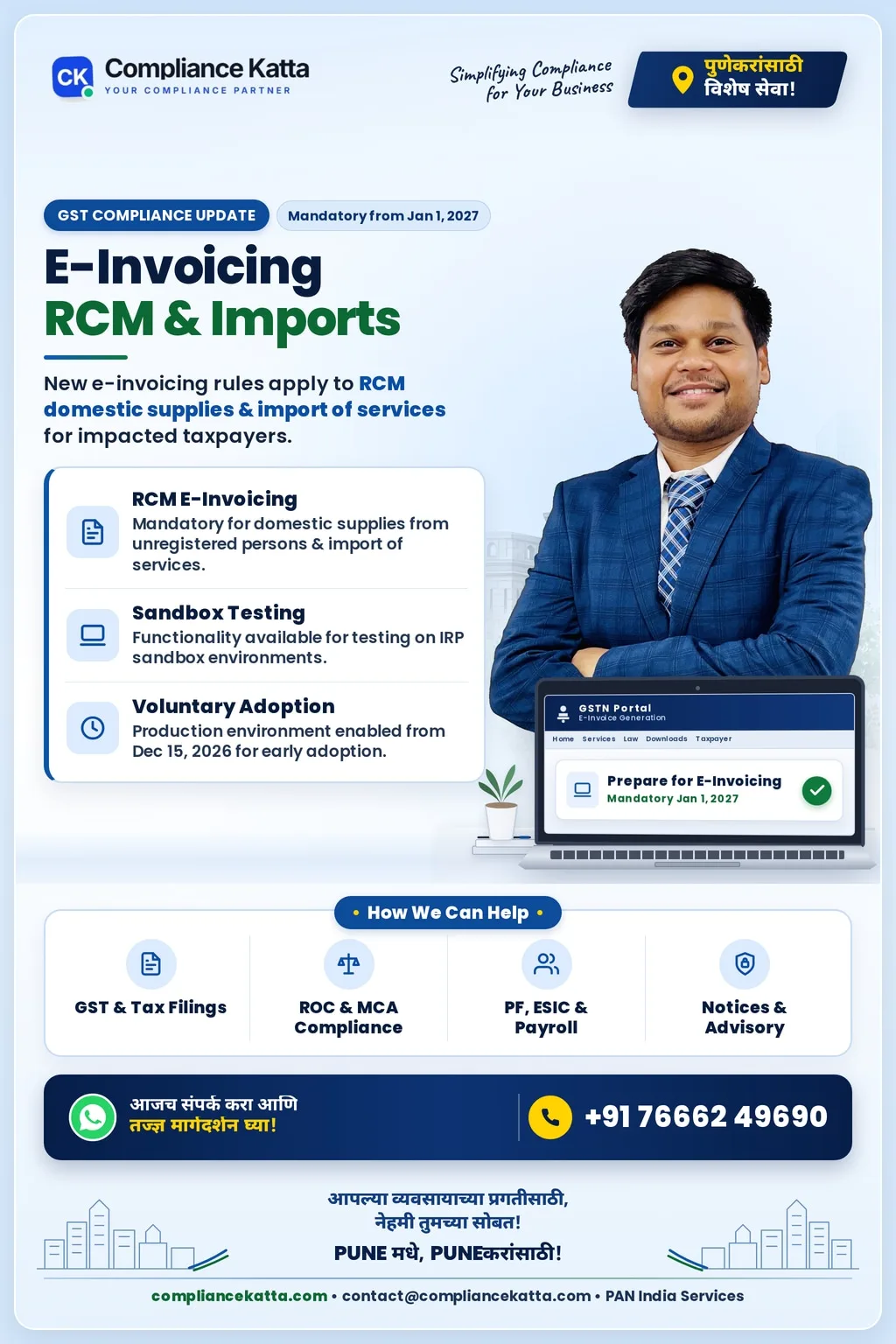
The Goods and Services Tax Network (GSTN) has released a pivotal advisory, GSTN Advisory No. 688 dated November 17, 2026, signaling a significant shift in e-invoicing compliance. This advisory mandates the implementation of e-invoicing for specific categories of transactions under the Reverse Charge Mechanism (RCM): domestic supplies received from unregistered persons (RCMDOM) and the import of services (RCMIMP). This crucial update is set to take effect from January 1, 2027, and demands immediate attention from businesses across Pune and Pan-India to ensure a smooth transition and adherence to the revised regulations.
This advisory is a continuation of earlier guidance issued on October 16, 2026, and is underpinned by legal amendments introduced through Notification No. 04/2026-Central Tax and Notification No. 05/2026-Central Tax, both dated October 26, 2026. These notifications formally amended the Central Goods and Services Tax (CGST) Rules and the e-Invoice schema, laying the groundwork for this mandatory expansion of e-invoicing.
Who is Impacted & Key Changes
The new e-invoicing mandate primarily impacts taxpayers who are recipients of domestic supplies from unregistered persons under the Reverse Charge Mechanism (RCMDOM) and those who import services (RCMIMP). Historically, these taxpayers were required to issue self-invoices for such transactions. With the new advisory, these self-invoices must now conform to the e-invoicing framework.
This includes a broad spectrum of Indian businesses, particularly Small and Medium-sized Enterprises (SMEs) engaged in these types of transactions. The core change is the mandatory generation of an Invoice Reference Number (IRN) for these self-invoices through the Invoice Registration Portals (IRPs), integrating them into the broader e-invoicing ecosystem.
Key Rule Changes:
- Mandatory E-Invoicing for RCM Supplies: E-invoicing will become compulsory for recipient-generated self-invoices under RCM for domestic supplies received from unregistered persons (RCMDOM) and for the import of services (RCMIMP).
- Integration with IRPs: All such self-invoices will need to be reported to the IRPs to obtain an IRN, similar to regular B2B e-invoices.
- Enhanced Compliance: This move aims to further streamline the GST compliance process, improve data accuracy, and curb tax evasion by bringing a wider range of transactions under the digital invoicing umbrella.
Implementation Timeline & Actionable Steps
To facilitate a seamless transition, the GSTN has outlined a clear implementation roadmap, providing ample opportunity for taxpayers and their technology partners to adapt their systems.
| Phase | Period | Action |
|---|---|---|
| Sandbox Testing | Ongoing | Functionality for RCMDOM and RCMIMP available in sandbox environments of all six authorized IRPs. Taxpayers, GSPs, ASPs, ERP providers, and integration partners advised to complete development and testing. |
| Voluntary Adoption | December 15, 2026 – December 31, 2026 | Functionality proposed to be enabled in production environments of IRPs. Eligible taxpayers may voluntarily generate IRNs for RCMDOM and RCMIMP to ensure early adoption and integration readiness. |
| Mandatory Implementation | From January 1, 2027 | E-invoicing becomes mandatory for recipient-generated self-invoices under RCM for domestic supplies from unregistered persons (RCMDOM) and for the import of services (RCMIMP). |
Businesses are strongly encouraged to leverage the sandbox environments for thorough testing of their ERP systems and accounting software. The voluntary adoption period offers a valuable window to iron out any technical glitches before the mandatory deadline.
Ensuring Compliance: A Practical Checklist
To ensure your business in Pune or elsewhere in India remains compliant with these new e-invoicing requirements, consider the following practical steps:
- Identify Impacted Transactions: Review your procurement processes to identify all domestic supplies received from unregistered persons under RCM and all imported services.
- Update ERP/Accounting Systems: Coordinate with your GST Suvidha Provider (GSP), Application Service Provider (ASP), or ERP vendor to ensure your systems are updated to generate e-invoices for RCMDOM and RCMIMP transactions.
- Utilize Sandbox Environments: Actively participate in testing the new functionalities in the IRP sandbox environments to ensure smooth integration and data flow.
- Consider Voluntary Adoption: If feasible, opt for voluntary generation of IRNs in the production environment from December 15, 2026, to gain practical experience and identify any issues early.
- Train Your Team: Educate your accounts, finance, and procurement teams on the new e-invoicing requirements and processes for RCM transactions.
- Refer Official Notifications: For comprehensive details on applicability, scope, exemptions, and other compliance requirements, refer to Notification No. 04/2026-Central Tax and Notification No. 05/2026-Central Tax, both dated October 26, 2026, and other relevant circulars.
- Monitor for Further Updates: Stay vigilant for any further advisories or clarifications from GSTN or the Government regarding these provisions.
Expert Advice from Compliance Katta: This expansion of e-invoicing to RCM supplies is a critical step towards comprehensive digital compliance. Businesses, especially SMEs in Pune and across India, must not underestimate the preparation required. Proactive engagement with sandbox testing and early adoption can prevent significant compliance challenges and potential penalties from January 1, 2027. We recommend a thorough review of your current RCM processes and immediate system upgrades.
Conclusion
The GSTN's advisory on mandatory e-invoicing for RCM domestic supplies and import of services marks a significant advancement in India's GST regime. With an effective date of January 1, 2027, businesses have a limited window to prepare their systems and processes. Non-compliance with e-invoicing provisions generally attracts penalties under the existing GST law, making timely preparation paramount. By understanding the changes, utilizing the provided testing environments, and seeking expert guidance, taxpayers can ensure a smooth transition and maintain robust compliance.
Disclaimer: This update is for general informational and educational purposes only and does not constitute formal legal, tax, or professional advice. Applicability may vary based on specific facts, turnover thresholds, and subsequent notifications. Please consult a qualified professional before acting on this information. For Pune & pan-India compliance assistance, contact Compliance Katta on WhatsApp at +91 76662 49690.
Common Questions
Q.What is the new e-invoicing requirement for RCM supplies?
Effective January 1, 2027, e-invoicing will become mandatory for recipient-generated self-invoices under the Reverse Charge Mechanism (RCM) for domestic supplies received from unregistered persons (RCMDOM) and for the import of services (RCMIMP). This means an Invoice Reference Number (IRN) must be generated for these transactions.
Q.Who needs to comply with this new e-invoicing mandate?
This update impacts all taxpayers who are recipients of domestic supplies from unregistered persons under RCM and those who import services, and are currently required to issue self-invoices. This includes a broad range of Indian SMEs and businesses engaged in such transactions.
Q.What is the effective date for mandatory e-invoicing for RCM supplies?
The mandatory e-invoicing for RCMDOM and RCMIMP transactions will take effect from January 1, 2027. Businesses must ensure their systems are ready to comply by this date.
Q.Can businesses start e-invoicing for RCM supplies before the mandatory date?
Yes, the functionality is proposed to be enabled in the production environments of Invoice Registration Portals (IRPs) from December 15, 2026. Eligible taxpayers may voluntarily generate IRNs for these supply types between December 15, 2026, and December 31, 2026, to facilitate early adoption and integration readiness.
Q.Where can I find detailed information about these e-invoicing changes?
For comprehensive details regarding applicability, scope, exemptions, and other compliance requirements, taxpayers are advised to refer to GSTN Advisory No. 688 dated November 17, 2026, and specifically Notification No. 04/2026-Central Tax and Notification No. 05/2026-Central Tax, both dated October 26, 2026.