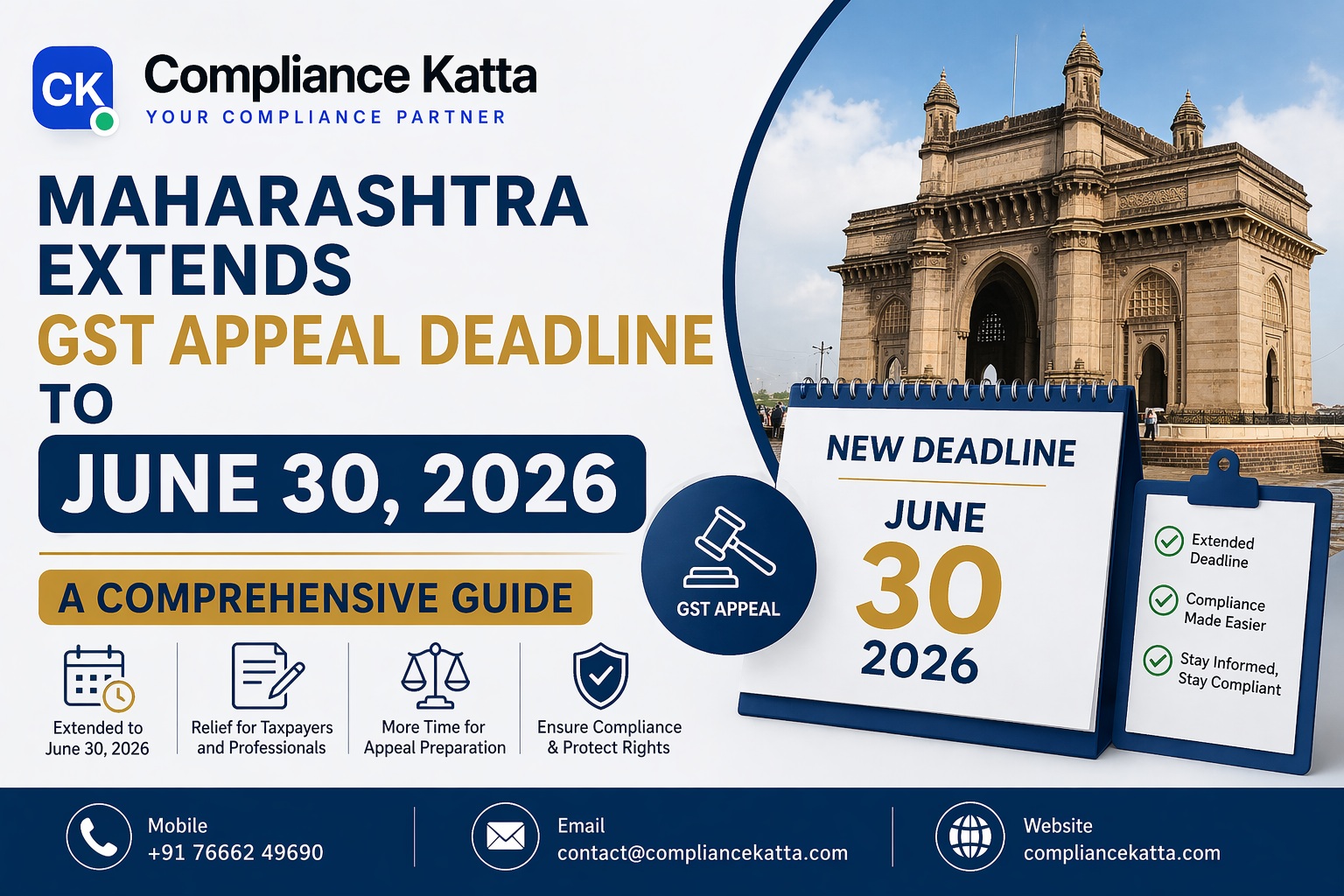
Introduction to the Maharashtra GST Appeal Extension
In a highly anticipated and business-friendly move, the Government of Maharashtra, exercising its powers under the Maharashtra Goods and Services Tax (MGST) Act, has issued a critical notification regarding the filing of appeals before the GST Appellate Tribunal (GSTAT). Recognizing the procedural delays in the complete operationalization of GSTAT benches across the state, the government has officially designated June 30, 2026, as the final date for filing appeals against specific orders. This extension applies exclusively to appellate or revisional orders communicated to taxpayers on or before April 1, 2026. For businesses operating in Maharashtra, this notification is not just a procedural breather; it is a vital strategic window. The absence of functional tribunals had previously left many taxpayers in a state of limbo, facing the looming threat of coercive recovery proceedings by the tax department. By extending the deadline, the government has provided clarity, allowing businesses to plan their litigation strategies, arrange for mandatory pre-deposits, and safeguard their working capital without the immediate panic of bank attachments or asset seizures. At Compliance Katta, we believe this is a monumental step toward fostering a fair and structured tax dispute resolution mechanism in the state.
Key Highlights of the Notification
- Extended Deadline: Taxpayers now have until June 30, 2026, to file their appeals before the GST Appellate Tribunal.
- Applicability Cut-off: The extension is strictly applicable to orders passed by the First Appellate Authority or Revisional Authority that are communicated on or before April 1, 2026.
- Relief from Recovery: The extended timeline implicitly protects taxpayers from arbitrary recovery proceedings under Section 79 of the MGST Act, provided the intent to appeal is established.
- GSTAT Operationalization: The notification aligns with the phased rollout and infrastructural setup of the GSTAT benches in Maharashtra, preventing a massive bottleneck of immediate filings.
- State-Specific Relief: This notification is issued under the MGST Act, focusing specifically on state-jurisdiction matters, though it heavily mirrors the central government's intent for harmonized tax administration.
Impact Analysis: What This Means for Businesses in Maharashtra
The extension of the GSTAT appeal deadline has profound implications for the commercial and legal frameworks of businesses operating in Maharashtra. Firstly, from a financial perspective, filing an appeal before the GSTAT requires a mandatory pre-deposit of 20% of the remaining disputed tax amount (subject to a maximum of Rs. 50 crores), in addition to the 10% already paid at the first appeal stage. By deferring the appeal deadline to June 2026, businesses gain significant breathing room to manage their cash flows and arrange for these funds without resorting to high-interest short-term borrowing.
Secondly, from a litigation strategy standpoint, complex GST issues such as inverted duty structures, input tax credit (ITC) mismatches under Section 16(4), and classification disputes require meticulous preparation. Taxpayers and their legal counsels now have ample time to collate factual evidence, analyze emerging judicial precedents from High Courts across the country, and draft robust, unassailable grounds of appeal. This prevents rushed, subpar filings that often lead to unfavorable tribunal outcomes.
Lastly, the administrative burden on corporate tax teams is significantly reduced. Companies with multiple pending litigations across different financial years can now systematically prioritize their case files, ensuring high-value disputes are given the meticulous attention they deserve. This structured approach, guided by experts at Compliance Katta, will undoubtedly increase the success rate of appeals at the tribunal level.
Comparative Analysis: Standard Rule vs. New Notification
| Parameter | Standard GST Law Provision | Impact of New Notification |
|---|---|---|
| Time Limit to Appeal | 3 months from the date of communication of the order (extendable by 1 month). | Extended up to June 30, 2026. |
| Applicable Orders | Any order passed by Appellate/Revisional Authority. | Orders communicated on or before April 1, 2026. |
| Coercive Recovery Actions | Can be initiated if appeal is not filed within 3 months. | Halted/Stayed until the extended deadline, provided statutory conditions are acknowledged. |
| Pre-deposit Payment | Required immediately upon filing within the 3-month window. | Payment deferred until the actual filing date (on or before June 2026). |
Structured Diagram: Flowchart for GSTAT Appeal Preparation
Follow this structured pathway to ensure seamless compliance and readiness for your GSTAT appeals:
- Step 1: Order Identification: Segregate all first appellate orders received on or before April 1, 2026.
- Step 2: Financial Assessment: Calculate the 20% mandatory pre-deposit required for each disputed order.
- Step 3: Document Collation: Gather show-cause notices, original assessment orders, first appeal orders, and all physical/digital annexures.
- Step 4: Legal Drafting: Engage with Compliance Katta to draft comprehensive grounds of appeal based on the latest jurisprudence.
- Step 5: Portal Readiness: Monitor the GST portal for the activation of the GSTAT appeal filing utility.
- Step 6: Final Execution: Pay the pre-deposit and file the appeal well before the June 30, 2026 deadline.
Actionable Compliance Checklist
- Verify the exact date of communication for all pending appellate orders to confirm eligibility under the April 1, 2026 cut-off.
- Calculate your contingent liabilities and required pre-deposits, incorporating them into your upcoming financial year budgets.
- Ensure that all communication from the state tax department regarding recovery is promptly answered by citing this specific deadline extension notification.
- Compile a centralized digital repository of all dispute-related documents, as physical records may degrade or be misplaced by 2026.
- Consult with the seasoned tax professionals at Compliance Katta to review the merits of your case before proceeding with the tribunal appeal.
Warning: Failure to file the appeal or pay the requisite pre-deposit by the extended deadline of June 30, 2026, will result in the first appellate order becoming final. This will trigger immediate and irreversible recovery actions, including bank account attachments under Section 79 of the MGST Act. Do not treat this extension as a reason to be complacent.
Conclusion
The Maharashtra Government's decision to extend the GSTAT appeal deadline to June 30, 2026, for pre-April 2026 orders is a pragmatic and highly beneficial regulatory update. It bridges the gap between legislative intent and infrastructural readiness, ensuring that taxpayers are not penalized for administrative delays in tribunal setup. However, the extended timeline should be viewed as an opportunity for rigorous preparation rather than a reason for procrastination. Complex GST litigations require a deep dive into facts, law, and procedure. By acting early, businesses can secure their working capital, build formidable legal defenses, and ensure total peace of mind. At Compliance Katta, we are dedicated to helping businesses navigate this transitional phase with expert advisory and litigation support. Reach out to us today to future-proof your GST compliance strategy.
Common Questions
Q.Who exactly is eligible for this extended GST appeal deadline?
This extension is applicable to taxpayers operating in Maharashtra who have received an order from the First Appellate Authority or Revisional Authority under the MGST Act. Specifically, the order must have been communicated to the taxpayer on or before April 1, 2026, to qualify for the June 30, 2026 deadline.
Q.Does this notification waive the mandatory pre-deposit required for GSTAT appeals?
No, the notification does not waive the mandatory pre-deposit requirement. Taxpayers are still required to pay 20% of the remaining disputed tax amount to validate their appeal, but they now have the flexibility to arrange and pay these funds anytime before the extended filing deadline of June 30, 2026.
Q.What should I do if the tax department initiates recovery proceedings before June 2026?
If the department initiates recovery for an order covered under this extension, you should immediately file a formal reply citing this government notification. By demonstrating your intent to file an appeal before the extended deadline, you can legally halt coercive actions like bank attachments. Consulting a professional at Compliance Katta is highly recommended in such scenarios.
Q.Will orders communicated after April 1, 2026, also get this extension?
No, orders communicated after the cut-off date of April 1, 2026, will not benefit from this specific extension. For such orders, the standard statutory timelines under the GST law (typically three months from the date of communication) will apply, assuming the GSTAT benches are fully operational by then.
Q.How can businesses best utilize this extended time frame?
Businesses should use this time to conduct a thorough financial and legal assessment of their pending disputes. This includes budgeting for the necessary pre-deposits, meticulously organizing case files, and working with experts like Compliance Katta to draft strong, evidence-backed grounds of appeal well ahead of the 2026 deadline.