Introduction to the May 2026 Income Tax Compliance Cycle
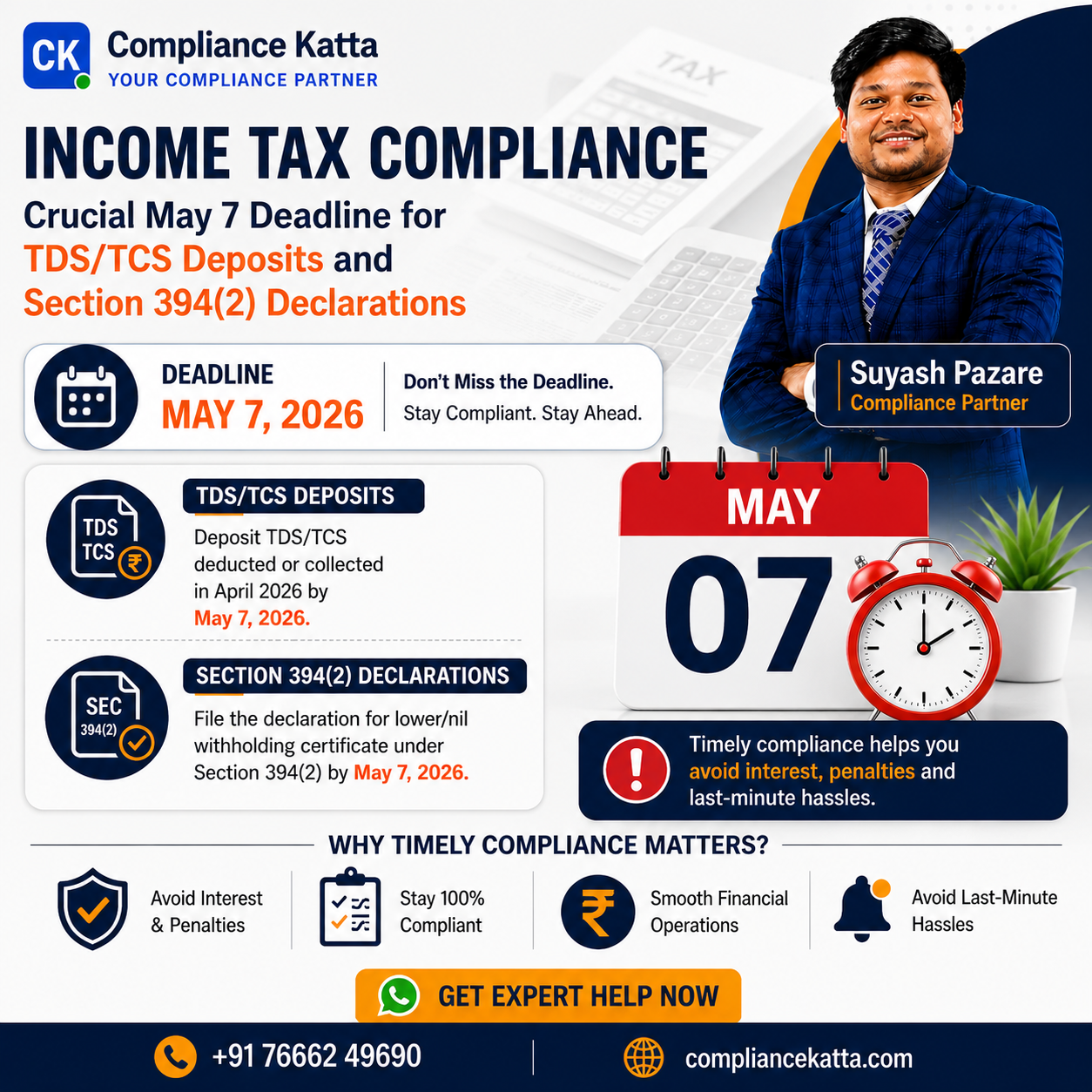
As the new financial year 2026-27 gains momentum, taxpayers across India are faced with their first major compliance milestone. The month of May marks a critical period for businesses, particularly regarding the statutory obligations stemming from transactions conducted in April 2026. Under the evolving regulatory landscape, specifically the provisions of the newly effective Income-tax Act 2025, the May 7 deadline is no longer just a routine date; it carries significant implications for corporate liquidity and legal standing.
Compliance Katta aims to provide a clear roadmap for deductors and collectors to ensure that all taxes are remitted accurately and on time, thereby avoiding the heavy hand of interest and penalties. This guide delves into the specific requirements for TDS/TCS deposits and the newly introduced declaration mechanisms for buyers.
Key Highlights of the May 7 Compliance Deadline
Understanding the core requirements of this deadline is the first step toward effective tax management. Here are the primary obligations taxpayers must fulfill by May 7, 2026:
- Deposit of TDS: All Tax Deducted at Source (TDS) on payments made in April 2026 (excluding government deductors who remit through book entries) must be deposited via Challan 281.
- Deposit of TCS: Tax Collected at Source (TCS) on sales or receipts during April 2026 must be remitted to the credit of the Central Government.
- Section 394(2) Declarations: The new Income-tax Act 2025 introduces Section 394(2), which requires buyers who intend to obtain goods without the collection of tax (TCS) to file the necessary declarations by this date.
- Digital Remittance: Deposits must be made electronically through authorized banking channels or the e-filing portal to ensure real-time reporting.
Professional Tip: Late payment of TDS attracts an interest of 1.5% per month or part of a month from the date of deduction. Therefore, even a single day's delay beyond May 7 can lead to a significant financial burden.
Decoding Section 394(2) of the Income-tax Act 2025
One of the most significant changes in the contemporary tax regime is the formalization of buyer declarations under Section 394(2). This provision is designed to streamline transactions where the buyer is eligible for a lower or nil rate of tax collection. Previously handled under different sections, the new Act centralizes this process to enhance transparency.
The Role of the Buyer
Buyers who meet specific criteria—such as using the purchased goods for manufacturing or processing rather than trading—can submit a declaration to the seller. This declaration must be valid and filed with the authorities by the 7th of the month following the month of purchase. Failure to submit this declaration on time results in the mandatory collection of TCS by the seller at the prevailing rates.
Responsibilities of the Seller
The seller is responsible for verifying the authenticity of the Section 394(2) declaration. If the seller proceeds without a valid declaration after the deadline, they may be held as a 'taxpayer in default,' making them liable for the uncollected tax, interest, and potential penalties.
Detailed Comparison: TDS and TCS Deposit Norms
The following table outlines the differences in compliance requirements for various entities as of May 7, 2026:
| Category of Deductor/Collector | Nature of Transaction | Due Date | Form/Challan Required |
|---|---|---|---|
| Non-Governmental Entities | TDS on Salaries/Contractors (April) | May 7, 2026 | Challan 281 |
| All Business Entities | TCS on Sale of Goods (April) | May 7, 2026 | Challan 281 |
| Government Deductors | Payments with Challan (April) | May 7, 2026 | Challan 281 / Book Entry |
| Buyers seeking Exemption | Section 394(2) Declaration | May 7, 2026 | Specific Declaration Form |
Impact Analysis for Indian Businesses
The transition to the Income-tax Act 2025 means that the internal audit teams must be more vigilant than ever. The impact of these deadlines is felt across several departments:
- Cash Flow Management: Large TDS/TCS liabilities must be planned for in the first week of the month to avoid liquidity crunches.
- Vendor Relations: For TCS compliance, ensuring that buyers have provided the necessary 394(2) declarations is vital to maintaining smooth commercial relationships.
- Reputational Risk: Frequent defaults in tax deposits can lower the 'Compliance Rating' of a business, potentially triggering scrutiny from the Income Tax Department.
Actionable Compliance Checklist
To ensure a seamless filing process, Compliance Katta recommends following this checklist before the May 7 deadline:
- Verify TAN Details: Ensure that the Tax Deduction and Collection Account Number (TAN) is active and correctly linked to your digital payment portal.
- Reconcile April Books: Perform a thorough reconciliation between your purchase/sales registers and the TDS/TCS entries to identify any omissions.
- Collect Section 394(2) Forms: Actively follow up with buyers who claim exemption from TCS and ensure their declarations are digitally signed and uploaded.
- Calculate Interest Early: If any April payments were missed, calculate the interest immediately and include it in the deposit to avoid further penalties.
- Confirm Challan Generation: Ensure that the Challan 281 is generated with the correct Minor Head (200 for TDS/TCS Regular Assessment) and Major Head.
- Document Everything: Maintain a digital repository of all payment acknowledgments and declarations for future assessment rounds.
Conclusion
The May 7 deadline represents the cornerstone of early-year tax compliance in India. With the introduction of the Income-tax Act 2025, the stakes for accuracy and timeliness have increased significantly. By adhering to the guidelines provided by Compliance Katta and utilizing the Section 394(2) provisions correctly, businesses can safeguard themselves against litigation and financial loss. Stay proactive, stay compliant, and ensure your tax obligations are met with the highest level of professional diligence.
Common Questions
Q.What is the penalty for depositing TDS after the May 7 deadline?
If a deductor fails to deposit the TDS by the due date of May 7, they are liable to pay interest under Section 201(1A). The interest is calculated at 1.5% for every month or part of a month from the date on which the tax was actually deducted to the date on which such tax is actually paid to the government.
Q.Who is required to file a declaration under Section 394(2) of the Income-tax Act 2025?
Section 394(2) declarations are required from buyers of goods who wish to receive those goods without the collection of TCS. This typically applies to buyers who will use the goods for manufacturing, processing, or production of articles, rather than for trading purposes, provided they submit the mandatory declaration to the seller and the department by the May 7 deadline.
Q.Does the May 7 deadline apply to government deductors?
For government deductors, the rules depend on how the tax is paid. If the tax is paid without the production of an income-tax challan (via book entry), the due date is usually the same day the tax is deducted. However, if the government office pays via a challan, the May 7 deadline applies for the April deductions.
Q.How can I verify if my TDS/TCS deposit was successful?
Taxpayers can verify the status of their deposits through the 'Challan Status Enquiry' on the official e-filing portal or by checking their Form 26AS/AIS after a few days of the transaction. It is important to ensure that the CIN (Challan Identification Number) is correctly reflected in the portal records to claim credit for the payment.
Q.Can I file Section 394(2) declarations manually?
Under the new regulatory framework of the Income-tax Act 2025, the department emphasizes digital-first compliance. Most declarations, including those under Section 394(2), are expected to be filed electronically through the compliance portal to ensure immediate validation and tracking by the tax authorities.