In this article
Introduction & Regulatory Context
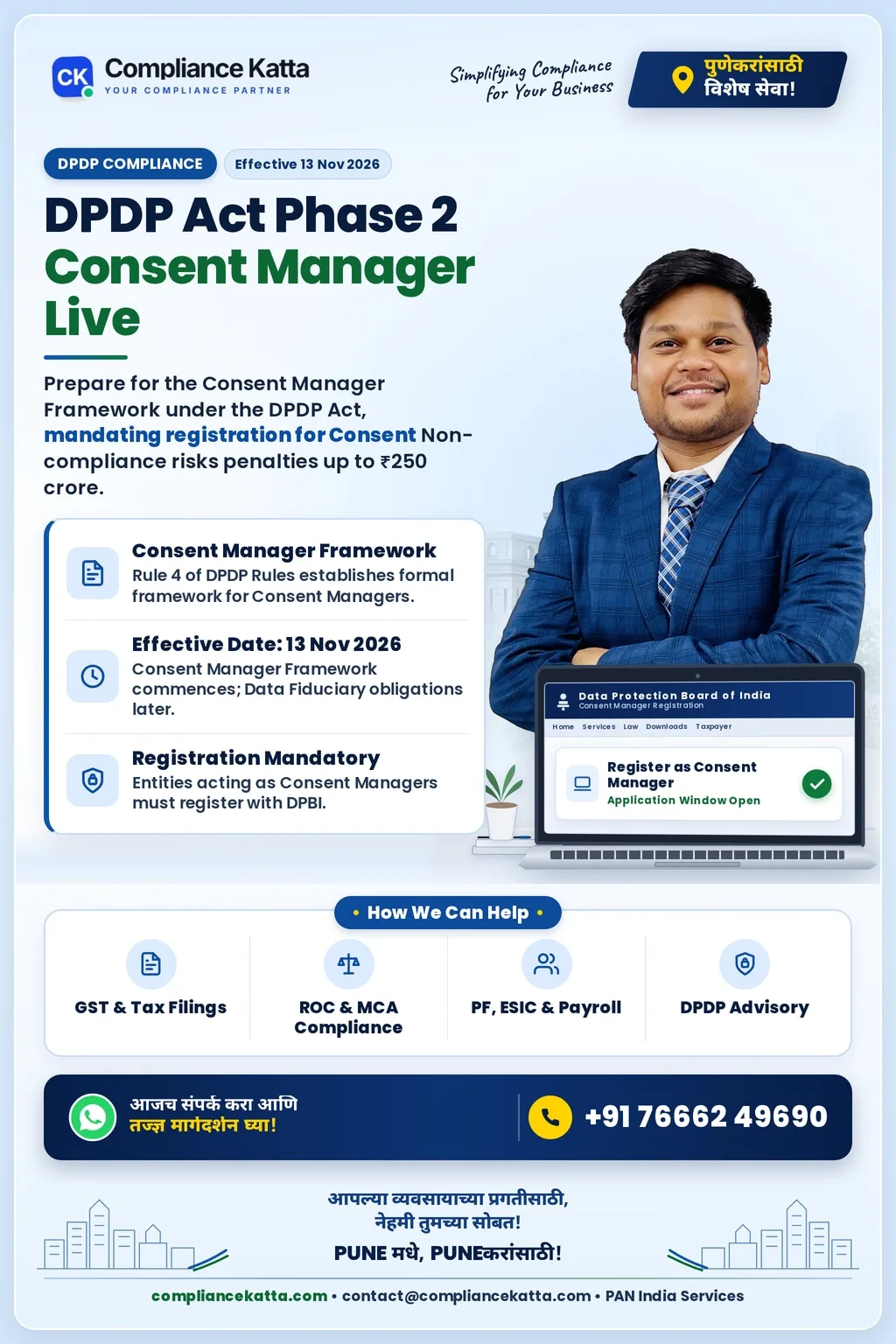
The Indian regulatory landscape is undergoing a significant transformation with the phased implementation of the Digital Personal Data Protection Act (DPDP), 2023. As businesses across Pune and Pan-India gear up for evolving compliance mandates, a pivotal development is set to take effect on November 13, 2026: the commencement of Phase 2, which introduces the much-anticipated Consent Manager Framework. This framework, established under Rule 4 of the Digital Personal Data Protection Rules, 2025, marks a crucial step towards enhancing individual control over personal data and ensuring robust data governance practices.
The Ministry of Electronics and Information Technology (MeitY), in conjunction with the Data Protection Board of India (DPBI), has laid the groundwork for this new ecosystem. While the DPDP Act was enacted earlier, the operationalization of specific rules, particularly those concerning the Consent Manager Framework, has been strategically phased. The notification of the DPDP Rules on November 13, 2025, set the stage, with Rule 4 now poised to become effective on November 13, 2026. This date is critical for both entities aspiring to become Consent Managers and the vast array of businesses that act as Data Fiduciaries.
Key Highlights & Statutory Changes
The introduction of the Consent Manager Framework is the cornerstone of this regulatory update. It aims to create a transparent and efficient mechanism for individuals to manage their consent for data processing activities. Here are the key statutory changes and their implications:
1. Establishment of the Consent Manager Framework
Rule 4 of the DPDP Rules, 2025, formally introduces the concept and operational guidelines for 'Consent Managers'. These are entities that will facilitate the process of obtaining, managing, and withdrawing consent from Data Principals (individuals) on behalf of Data Fiduciaries. This framework is designed to streamline consent management, making it more accessible and manageable for both individuals and organizations.
2. Mandatory Registration for Consent Managers
Any organization intending to operate as a Consent Manager must undergo a formal registration process with the Data Protection Board of India (DPBI). This is not an optional step; it is a prerequisite for legally operating as a Consent Manager. The registration process will involve scrutiny to ensure adherence to the prescribed standards and requirements.
3. Eligibility Criteria and Operational Standards
To ensure the integrity and reliability of the Consent Manager ecosystem, stringent eligibility criteria have been set. Prospective Consent Managers must be incorporated as companies in India and demonstrate a minimum net worth of ₹2 crore. Furthermore, they are obligated to comply with specific technical standards related to interoperability, data security, and transparency in their operations. These standards are crucial for building trust and ensuring seamless integration with Data Fiduciaries.
4. Adaptation for Data Fiduciaries
For the vast majority of businesses operating in India, including startups, SMEs, large corporations, and even foreign entities serving Indian consumers, the impact is profound. Data Fiduciaries, which are entities that collect and process personal data, must now proactively prepare to integrate their consent collection and management mechanisms with the registered Consent Managers. This requires an assessment of current consent practices and potential modifications to ensure compatibility with the new framework.
Comparative Summary: Pre- and Post-Consent Manager Framework
The introduction of the Consent Manager Framework represents a shift from potentially ad-hoc consent mechanisms to a structured, regulated approach. Here's a brief comparison:
| Aspect | Pre-Consent Manager Framework (Current/Transitional) | Post-Consent Manager Framework (Effective 13 Nov 2026) |
|---|---|---|
| Consent Mechanism | Primarily direct collection by Data Fiduciaries; varying levels of transparency and control. | Facilitated by registered Consent Managers; standardized, transparent, and user-controlled. |
| Consent Manager Role | No formal role or framework defined. | Formal registration required; must meet net worth, incorporation, and technical standards. |
| Data Fiduciary Obligation | Collect and process data as per DPDPA, with consent as a key lawful basis. | Adapt systems to integrate with registered Consent Managers for consent acquisition and management. |
| Regulatory Oversight | General provisions of DPDP Act. | Specific rules for Consent Managers (registration, standards) and their interaction with Data Fiduciaries. |
Practical Compliance Checklist for Businesses
With the November 13, 2026, deadline fast approaching, businesses must take concrete steps:
- Assess Data Processing Activities: Identify all personal data collected, processed, and shared, and the lawful basis for such processing, with a focus on consent.
- Review Consent Mechanisms: Evaluate current methods of obtaining and managing user consent. Determine what modifications are needed to align with the Consent Manager Framework.
- Identify Potential Consent Managers: Begin researching and identifying potential registered Consent Managers that could serve your business needs.
- Plan for Integration: Develop a strategy for integrating your systems with Consent Managers, ensuring technical compatibility and data security.
- Stay Informed: Monitor official announcements from MeitY and DPBI regarding the registration process for Consent Managers and any further clarifications.
Deadlines, Penalties, and Strategic Planning
The Consent Manager Framework becomes effective on November 13, 2026. While this date is critical for establishing the infrastructure, the substantive obligations and penalties under the DPDP Act for Data Fiduciaries are slated to commence on May 13, 2027. This provides a crucial window for preparation and testing.
Non-compliance with the DPDP Act can attract severe penalties, with potential fines reaching up to ₹250 crore per breach category. The cumulative exposure could exceed ₹650 crore. Businesses are strongly advised to utilize the period leading up to May 2027 to build and test their compliance infrastructure, ensuring they are fully prepared to meet the Act's requirements and avoid substantial financial repercussions.
Expert Advice from Compliance Katta:
The introduction of the Consent Manager Framework is a significant step towards a more privacy-conscious digital economy in India. Businesses must view this not just as a compliance hurdle, but as an opportunity to build greater trust with their customers by adopting transparent and user-centric data handling practices. Proactive engagement with this framework, starting now, is key to mitigating risks and ensuring long-term business continuity. For Pune and pan-India businesses, understanding these nuances and implementing them effectively is paramount.
Conclusion
The DPDP Act's Consent Manager Framework, effective November 13, 2026, signifies a maturing regulatory environment for data protection in India. It necessitates a strategic approach from both aspiring Consent Managers and Data Fiduciaries. By understanding the requirements, preparing for integration, and adhering to the stipulated timelines, businesses can navigate this new phase successfully, foster trust, and avoid significant penalties. Compliance Katta is committed to guiding businesses through these evolving regulations, ensuring robust data protection compliance across Pune and Pan-India.
Disclaimer: This update is for general informational and educational purposes only and does not constitute formal legal, tax, or professional advice. Applicability may vary based on specific facts, turnover thresholds, and subsequent notifications. Please consult a qualified professional before acting on this information. For Pune & pan-India compliance assistance, contact Compliance Katta on WhatsApp at +91 76662 49690.
Common Questions
Q.What is the Consent Manager Framework under the DPDP Act?
The Consent Manager Framework, effective November 13, 2026, establishes a system where registered entities (Consent Managers) facilitate the process for individuals (Data Principals) to grant, manage, and withdraw consent for their personal data processing by businesses (Data Fiduciaries).
Q.Who needs to register as a Consent Manager?
Any entity that intends to operate as a Consent Manager, helping individuals manage their data consent preferences with various organizations, must register with the Data Protection Board of India (DPBI).
Q.What are the eligibility criteria for Consent Managers?
Consent Managers must be Indian-incorporated companies with a minimum net worth of ₹2 crore. They also need to adhere to stringent technical standards for interoperability, security, and transparency as prescribed by the DPBI.
Q.How does the Consent Manager Framework impact Data Fiduciaries?
Data Fiduciaries, which are businesses that collect and process personal data, must adapt their existing consent collection and management processes to integrate seamlessly with the ecosystem of registered Consent Managers. This ensures compliance with the DPDP Act's consent requirements.
Q.What are the penalties for non-compliance with the DPDP Act?
Non-compliance with the DPDP Act can lead to significant penalties, potentially reaching up to ₹250 crore per breach category. The overall penalty exposure could exceed ₹650 crore, making proactive compliance essential.